St. John Paul II, St. Maximilian Kolbe, & the Blessed Mother – Video
In this brief video by Sherwood Fellows the key themes of Lent are explored - th...
 Dr. Italy

In this brief video by Sherwood Fellows the key themes of Lent are explored - th...
In this 8 minute video, Marcellino D’Ambrosio, Ph.D. (Dr. Italy) shares so...
St. Patrick's Day has been celebrated on March 17 for fifteen hundred years since it is the day that Patrick, the missionary bishop who evangelized Ir...
REDEMPTORIS MATER (Mary, Mother of the Redeemer) John Paul II Encyclical Letter of John Paul II on the Blessed Virgin Mary in the Life of the Pilgrim ...

When his enemies quiz him about what commandment is the greatest, Jesus reveals just how radical he really is. His answer goes to the very root of ev...


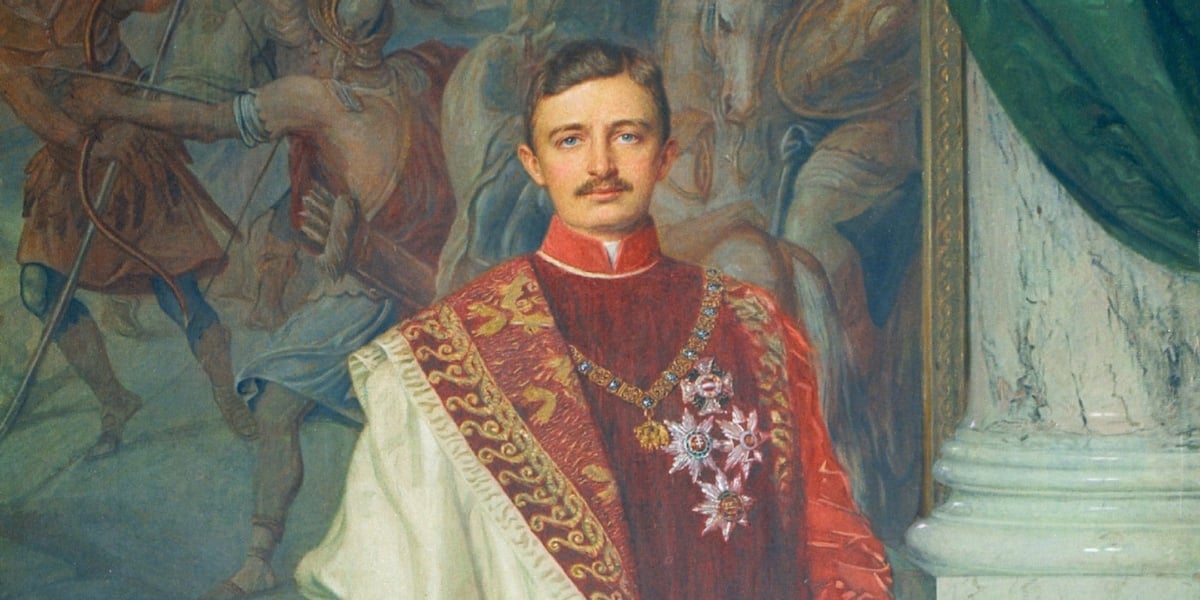
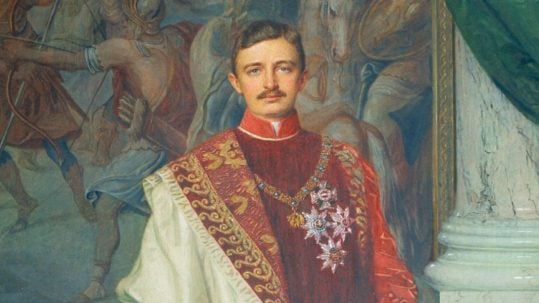
Blessed Karl (Charles) Hapsburg of Austria took to heart his duties as a Catholic ruler, and strove for peace in the midst of a terrible war, exhibiting all the characteristics of a courageous and virtuous Christian leader, as well as devoted husband and father. The cause for canonization is also in progress for his beloved wife, Servant of God Empress Zita of Austria. His feast day is celebrated on October 21, the anniversary of his marriage.
At his birth in 1887, Archduke Karl Hapsburg was far down the line of succession of the Empire, and it was unlikely that he could reign. He received a good education and was a fervent Catholic but was not destined to assume high political power and therefore received no specific training in State affairs. Like his father, he became a low-ranking officer in the Austro-Hungarian army while pursuing studies in law and political science. In 1911, Karl married Princess Zita of the Italian house of Bourbon-Parma.
After the assassination of Archduke Franz Ferdinand in Sarajevo by a Serbian nationalist in June of 1914, Archduke Karl became heir to the throne. This assassination led to Austria’s attack upon Serbia, which in turn triggered World War I. Upon the death of Franz Josef in November 1916, Archduke Karl succeeded to the throne, becoming Emperor Karl I of Austria and IV of Hungary. Inheriting a war that he abhorred, Karl’s untiring efforts for peace were foiled by his supposed ally, Germany, and by their opponents, Britain and France.
When the war ended in defeat of the Germans and Austrians, the victors took the opportunity to dismantle the Austro-Hungarian Empire and de-throne Emperor Karl who was ultimately reduced to poverty and exiled to the Portuguese Island of Madeira. Due in part to abject living conditions and no heat in winter, the Emperor contracted pneumonia and died in 1922, at the young age of 35. The victim of countless injustices and betrayals, Emperor Karl refused to give in to bitterness. He died forgiving his persecutors and loving his wife who was left a widow pregnant with their 8th child.
On October 3rd, 2004, Pope John Paul II proclaimed Karl of Habsburg blessed. Here are his words: “He was a friend of peace. In his eyes, war seemed like a horrible thing. Having come to power in the turmoil of the First World War, he tried to promote the peace initiative of my predecessor Benedict XV. From the beginning, Emperor Karl conceived his office as a holy service to his subjects. His main concern was to follow the vocation of the Christian to holiness also in his political action.”
In 2008, a second miracle through the intercession of Blessed Karl of Austria was recognized, paving the way for the future canonization
Banner/featured image of Blessed Karl of Austria by an Tom von Dreger. Public domain.


From a colorful and varied background as a professor of theology, a father of five, business owner, and professional performer Marcellino D’Ambrosio (aka “Dr. Italy”) crafts talks, blog posts, books, and videos that are always fascinating, practical, and easy to understand. He is a popular speaker, TV and radio personality, New York Times best-selling author, and pilgrimage host who has been leading people on a journey of discovery for over thirty years. For a fuller bio and video, visit the Dr. Italy page. For a full Curriculum Vitae (CV) of Dr. Italy, contact Crossroads at [email protected].


No Comments