Pope Leo XIV – Inaugural Mass Homily
Elected on May 8, 2025, as the 267th successor of St. Peter, Pope Leo XIV’...
 Dr. Italy

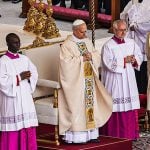
Elected on May 8, 2025, as the 267th successor of St. Peter, Pope Leo XIV’...
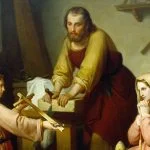
Saint Joseph always appears in Manger scenes during Advent and Easter time and e...

December 9, 2025 Dear Friends in Christ, Having just celebrated Thanksgiving, I just want to give thanks. 2025 has been one of the most extraor...
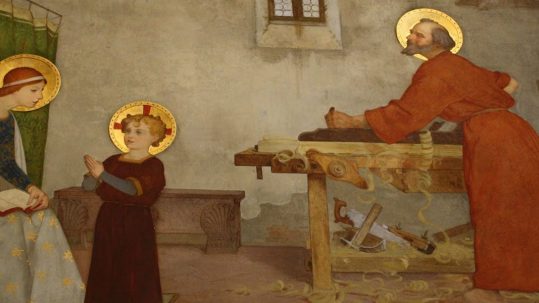
Saint Joseph always appears in Manger scenes during Advent and Easter time and even has a special Solemnity or Feast in his honor, St. Joseph's Day, M...
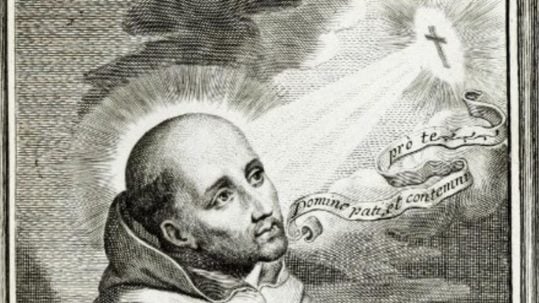
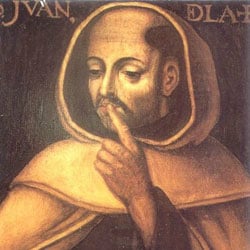
Saint John of the Cross makes clear that the only path to profound knowledge of God and the joy that this brings is through tribulation and suffering....


Maria Augusta Kutchera was born in 1905, the same year as St. Faustina Kowalska. She lost her mother at an early age and was promptly left by her father in the care of a distant relative to raise while he traveled the world. The male figure of the home she grew up in was an atheist, and this caused young Maria to rebel against all religion and aggressively promote irreligion to her schoolmates. Her love of music and the mountains was the great joy of her life as a girl and single woman. One day when she went into a church assuming the crowd gathered there was for a Bach or Mozart concert, she found to her horror that she had gotten trapped in a Lenten mission. Surprisingly, she found the preacher riveting and was drawn to faith after meeting with him privately. Instantly she knew that if God were real, she needed to give her all to him. In her impetuous way, she immediately marched into Salzburg inquiring which was the strictest convent in town. She was directed to the cloistered Abbey of Nonnberg, the oldest Benedictine nunnery north of the Alps. She was accepted as a postulant there and later wrote that it was the first home she ever knew. Thus she was shocked and disappointed when the Abbess asked her to leave the convent for a few months to help a widowed Austrian Baron with his seven children. She fell in love with these children and they fell in love with her. It was the first time since the death of her mother that she ever received affection from anyone. The Baron, a retired submarine captain of the Austrian Imperial Navy, eventually broke a near-engagement with a princess and proposed marriage to Maria. When the Abbess told Maria she thought this was the will of God, Maria was furious. She grudgingly accepted the proposal for the sake of the children and the will of God. She soon, however, fell in love with her new husband who, despite his portrayal in the Sound of Music, was an exceptionally gentle and kind man. The career of the Trapp family singers began well before the Nazi takeover of Austria. But after they fled through the mountains to Italy, they did a concert tour of England and finally emigrated to the US where they built a home in the mountains of Stowe, Vermont. The zeal for Christ that burned within Maria and many of the children kept them singing after the death of the Baron in 1947. When the birth of grandbabies signaled the end of concert tours, Maria and three of the single children went to Micronesia as lay missionaries. Maria, who became active in the Catholic Charismatic movement in the 70’s., died in 1987.