St. John Paul II, St. Maximilian Kolbe, & the Blessed Mother – Video
In this brief video by Sherwood Fellows the key themes of Lent are explored - th...
 Dr. Italy

In this brief video by Sherwood Fellows the key themes of Lent are explored - th...
In this 8 minute video, Marcellino D’Ambrosio, Ph.D. (Dr. Italy) shares so...

In this 14 minute podcast, Dr. Italy discusses the inspiring life of the great friend of St. Francis of Assisi, St. Claire. Her name means light or c...
When the Pharisees and the Herodians brought up the issue of paying taxes to the Emperor, Jesus uttered the famous line "render to Caesar what is Caes...
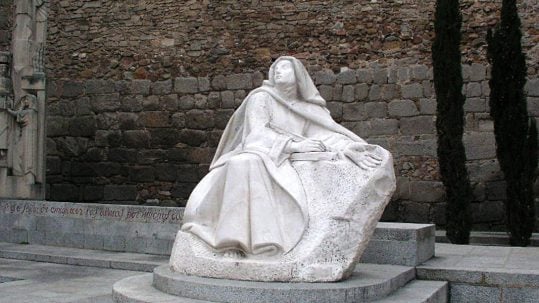
St. Teresa of Avila on friendship with Jesus as the key to contemplation and the spiritual life and how all blessings, particularly contemplative pray...



September 11 is the anniversary of one of most brutal acts of terrorism of all time. Three days later, on September 14, the Catholic and Eastern Orthodox Churches celebrate the Feast of the Exaltation, and triumph of the cross of Jesus Christ. This reflection brings out the link between 9/11 and the victory of the cross and helps us understand why the cross, an instrument of torture in the hands of brutes, becomes a tree of life in the hands of the Savior.
To LISTEN to this post read by Dr. Italy, click on the play arrow on the left, directly below this paragraph.
September 11, 2001 is a day that never will be forgotten.
Most of us can remember exactly where we were on 9/11 when we heard the news. An airliner had crashed into one of New York’s twin towers. When a second plane took out the second tower, we knew it was no accident. We wondered about how many more planes had been turned into flying bombs and where they would strike next.
Shock and Awe. Horror and Terror. That’s the brutal and arrogant goal of terrorism. Let’s exalt ourselves and our cause by humiliating and stunning our enemy.
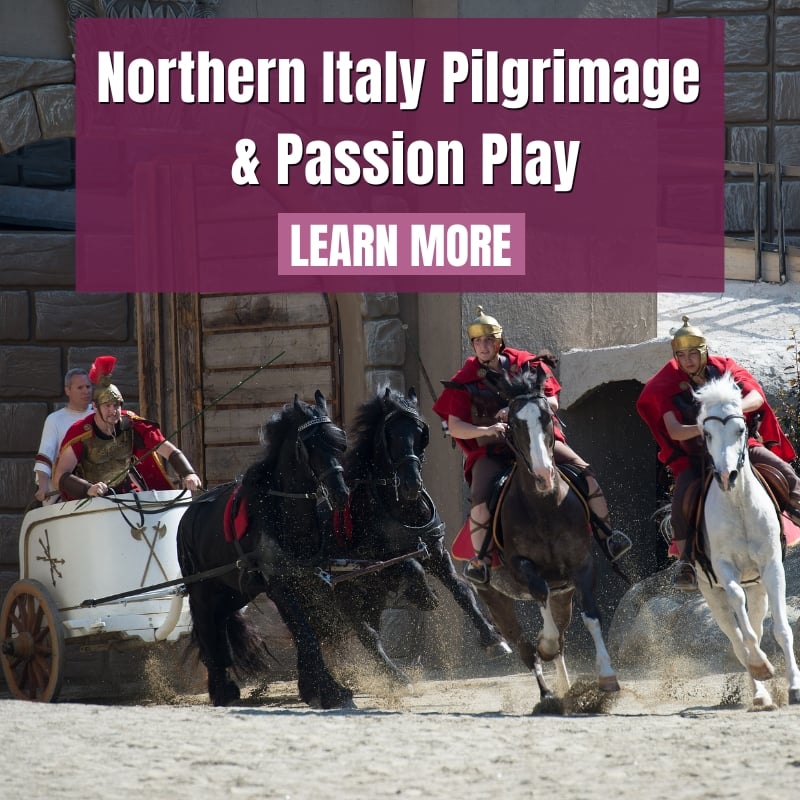
Image: Grande spettacolo di teatro popolare by Rubin Pedrazzo Stefano. CC-by-SA 4.0.
So we declared war on it. Made new laws against it. Opened new government agencies to combat it.
But wait. Terrorism is actually nothing new. It’s probably as old as the human race.
In fact the cradle of civilization, now Iraq, was the home of the most infamous terrorists of antiquity, the kings of the Assyrian Empire. Their goal was to conquer their neighbors in a way that would minimize initial resistance and subsequent rebellion. To do this, they knew fear would be their greatest weapon. Simple threat of death for those who resisted was not enough because many would prefer death to slavery. So the Assyrians developed the technology to produce the maximum amount of pain for the longest amount of time prior to death. It was called crucifixion. This ingenious procedure proved to be a very effective terror tactic indeed.
It was the policy of the Roman Empire to adopt from conquered peoples whatever appeared useful. They found crucifixion an excellent tool of intimidation. The humiliation of being stripped naked to die in a public spectacle was particularly loathsome to Jews for whom public nudity was an abomination. Incidentally, crucifixion was deemed so horrible that Roman law forbade that it be carried out on a Roman citizen, even a traitor. It was reserved only for slaves and conquered peoples.
Non-Christians have often asked a very good question–why do Christians adorn their churches, homes, and necks with a symbol of abasement, terror, and torture?
The feast of the Exaltation or Triumph of the Holy Cross provides the answer.
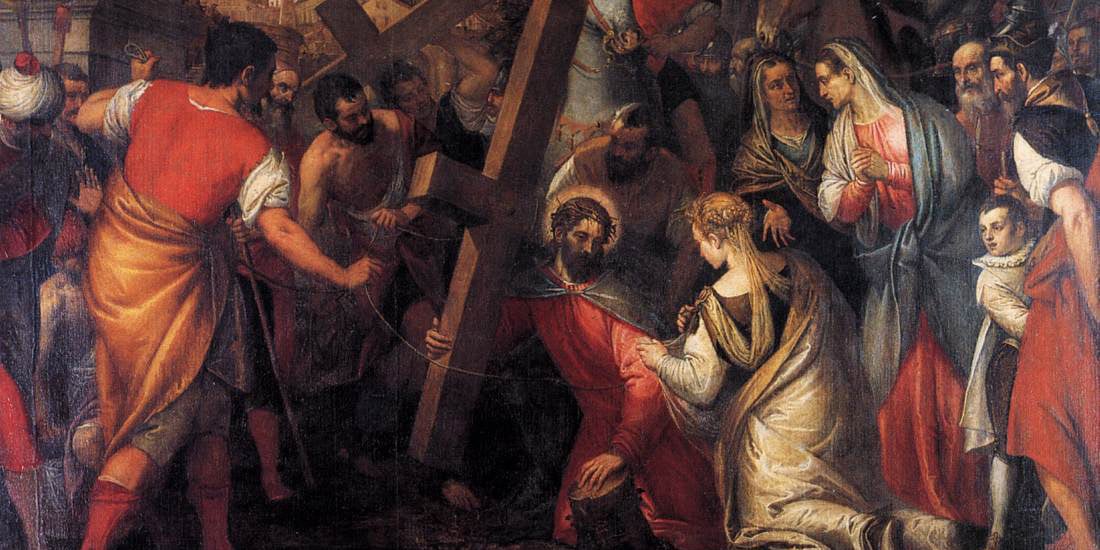
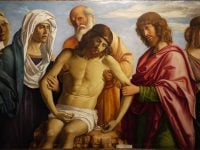
Image Jesus Meeting Veronica by Carlo Caliari. Public domain.
St. Anselm (12th century) explained it this way. Our first parent’s sin was all about pride, disobedience, and self-love. Deceived by the serpent, Adam and Eve ate the forbidden fruit in defiance of God because they wanted to exalt themselves as His equal. The results were catastrophic–loss of communion with God, each other, and the created universe. The history of the human race has been a story in which each one of us, weakened by the impact of this sin on our nature, have followed its pattern, proudly refusing to obey God and love our neighbor.
Anselm pointed out sin constitutes an infinite offense against the goodness and honor of God. Having been created free and responsible, bound by the law of justice, our race is obliged to offer acts of love, humility and obedience to God powerful enough to cancel out the long legacy of disobedience, pride, and un-love and restore our friendship with him.
Problem is, our wounded race could not begin to attempt such a task. So the Father sent His Eternal Word to become man and accomplish the task in our place, to substitute for us. For the immortal, infinite God to empty himself and unite himself to a limited, vulnerable human nature was already a feat of unimaginable love and humility. But for redemption to be complete, the hero would have to withstand the greatest fury that hell and fallen humanity could hurl against him–the cross.
Surely, after the crowds he had healed and fed cried “Crucify him!” and his own apostles fled, Jesus would realize it wasn’t worth it. Surely he would curse the ingrates and use his divine power to free himself as many suggested in their taunts. But no. His was love to the end, love to the max (John 13:1). His death was the clear and undeniable manifestation of the triumph of obedience over disobedience, love over selfishness, humility over pride.
Good Friday was the D-Day of the human race. Since Pentecost, the power of Christ’s obedient, humble, unstoppable love has been made available to all who are willing to share it, producing martyrs and saints in every generation, down to the Maximilian Kolbe’s and Mother Teresa’s of our own era.
Nations should take legal and military measures to combat terrorism. But such measures will never fully defeat it. Only total love can overthrow it and turn its very acts back upon its ugly head. And that is exactly what the Lord accomplished on Good Friday and shared with us on Pentecost.
This post is a reflection on scripture readings for the liturgical Feast of the Exaltation, victory, and triumph of the Holy Cross (Numbers 21:4b-9; Philippians 2:6-11; John 3:13-17). This post brings out the connection of the feast with the anniversary of the terrorist act of September 11. 9/11 is observed around the world in honor of the 3,000 victims of terrorism in New York, Washington, and Pennsylvania.
For a podcast on this topic of 9/11 or September 11, listen to Twin Tower Terrorism and the power of the cross.
Banner/featured image by Myles Davidson on FreeImages. Public domain.


From a colorful and varied background as a professor of theology, a father of five, business owner, and professional performer Marcellino D’Ambrosio (aka “Dr. Italy”) crafts talks, blog posts, books, and videos that are always fascinating, practical, and easy to understand. He is a popular speaker, TV and radio personality, New York Times best-selling author, and pilgrimage host who has been leading people on a journey of discovery for over thirty years. For a fuller bio and video, visit the Dr. Italy page. For a full Curriculum Vitae (CV) of Dr. Italy, click here. 

No Comments